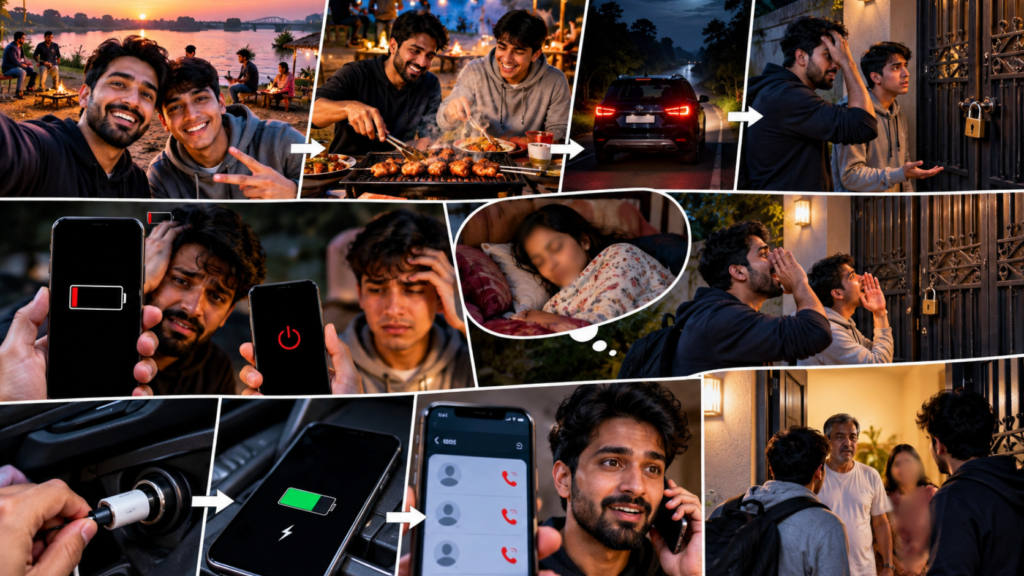
Power banks are now becoming an integral part of our daily lives. Due to people’s increased internet consumption and smartphone addiction, or because devices have limited charging capacity, the use of power banks has surged. And for special moments-like when someone goes on a trip-an extra power source is needed. Or in areas with power issues, power banks are also used extensively. So today, based on my eight years of experience, we’ll learn what factors to consider when buying a power bank. First, we need to look at capacity, or storage capacity.
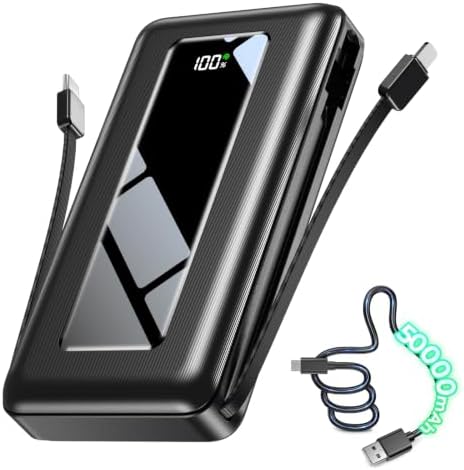
A power bank’s capacity is primarily measured in milliampere-hour units, or mAh. Before buying, we must also know the capacity of our smartphone or device. And then we need to consider how large a capacity we should choose for our power bank. So, let me tell you how to calculate it. When charging from a power bank, some energy is wasted as extra heat. You have to keep that in mind. So, if your smartphone’s capacity is 5000 mAh, then you can get a 10000 mAh power bank or larger. A minimum of 10,000 mAh. The reason is that with a 10,000 mAh power bank, you can charge your smartphone one and a half to two times. But if your power bank’s capacity is 5000 mAh, then you won’t be able to charge it properly, let alone fully.
Now, the second thing you need to keep in mind is the fast charging mode. Fast charging is essential for your smartphone when your smartphone supports fast charging. If your smartphone supports fast charging or has fast charging capability, then I would definitely recommend you buy a fast-charging power bank. This will save you two to two-and-a-half times more time. When it comes to fast charging, you need to check the wattage. Typically, power banks output between 11 and 12 watts. However, for fast charging, you should choose a fast charger or a power bank with Quick Charge support of at least 18 to 20 watts, or even more. To charge a laptop, you will definitely need a power bank of 65 watts or more. Next, the third thing you need to keep in mind is the number and type of ports on your power bank.
When you buy a power bank, you should definitely check how many ports it has, what types of ports they are, and which ones are most convenient for you. The more ports you have, the more you can use your power bank. Power banks typically have two types of ports: output ports and input ports. For charging multiple devices at once, you’ll need additional output ports and ports of various types. Since a Type-C port is now mandatory, you should have more of them on your power bank, which will help your devices charge much faster. Input Port: This is how you charge your power bank, and it must also have a Type-C port to charge it quickly. And fourth, the most important factor for a power bank is the battery type. You must pay close attention to what kind of battery your power bank contains.
Generally, two types of batteries are found on the market that are used to make power banks. One of them is the lithium-ion battery, and the other is the lithium-polymer battery. Lithium-ion batteries are relatively cheaper and much heavier. In contrast, lithium-polymer batteries are lightweight, can be used to create slim devices, and are very safe. Even though it’s a bit more expensive, in my opinion, it would be a wise decision to buy a power bank with a lithium polymer battery.
And the fifth thing you must consider is its size, weight, and portability. Alright? I’ve put together a topic on these few points. So, this includes what you’ll use your power bank for, where you’ll keep it, how you’ll use it, whether you’ll carry it in your hand or keep it in a bag, whether you’ll use it at home, or if you’ll travel with it, okay? Considering these points, the size, design, and weight of your power bank, as well as its capacity, will depend on how you plan to use it. Think about these things first.
Number seven is another feature: pass-through charging. This is a great feature that you’re seeing on many power banks now. It means that while your power bank is charging from a wall outlet, it can simultaneously charge other devices. This is also a fantastic feature for regular travelers. in a hotel, or in an emergency, this can be very necessary. And the eighth and final point is brand and warranty. You should try to avoid unfamiliar, cheap brands, even if they have a high capacity. This is because most of the time, the capacity stated on many power banks is not actually delivered. So you should definitely buy a power bank from well-known, reliable brands like Xiaomi, Anker, Asus, Ugreen, Adata, and the like. Because they come with an official warranty, you won’t have to worry much about capacity, durability, or sturdiness. So that was our detailed guide to buying a power bank today. Stay tuned. Thank you again for reading our entire blog.